
A simple explanation of AI agents, where they help at work, where they fail, and how to use them without handing over important decisions blindly.
Quick answer
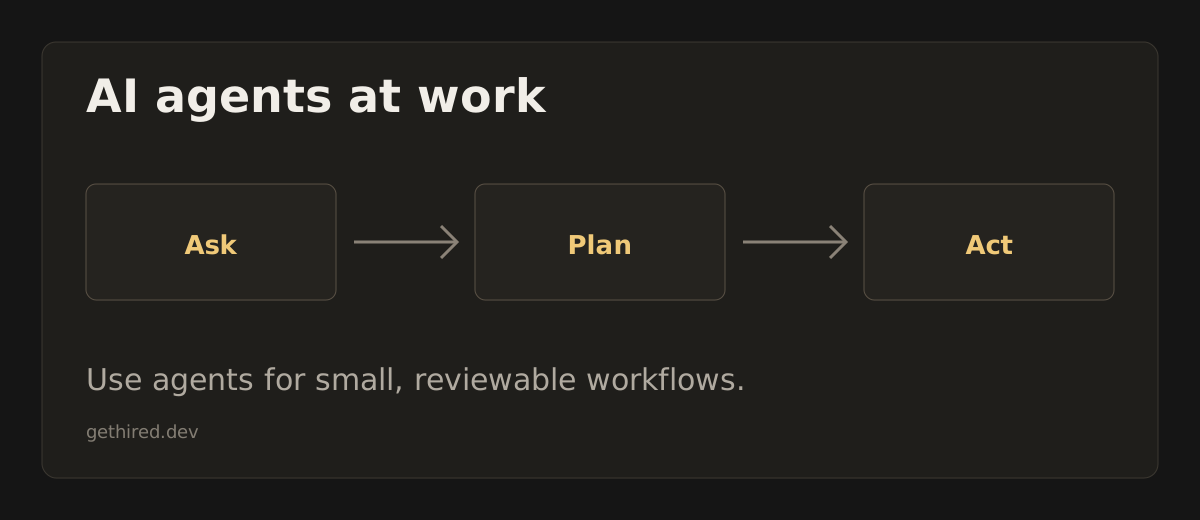
An AI agent is software that can take a goal, choose steps, use tools, and report back. The useful version is not magic. It is a small workflow with clear limits, human review, and logs.
Why people are searching this
AI agents are trending because search, office tools, finance products, and developer platforms are moving from chat-only answers to task execution. Google described agentic Search updates in 2026, and Gartner lists multiagent systems as a major technology trend.
Who this is for
This is for students, job seekers, founders, and workers who keep seeing AI headlines but want to know what actually changes in daily work.
The simple way to understand it
| Task | Good agent use |
|---|---|
| Research | Collect sources, summarize differences, show uncertainty |
| Support | Draft replies and find help docs before a human sends |
| Sales | Prepare account notes and next-step reminders |
| Coding | Open issues, suggest patches, run tests |
a simple example
Imagine you use AI to draft a client email. A weak workflow is: ask for an email, copy it, send it. A stronger workflow is: give the tool context, ask for a short draft, check every claim, add one real detail, and send only after the message sounds like you. The difference is ownership. AI can speed up the draft, but you still own the result.
What to do next
- Start with one repeatable workflow.
- Define what the agent can read and change.
- Require approval before sending, spending, deleting, or publishing.
- Check logs weekly and remove any step that creates confusion.
Quick checklist
- Can I explain the output?
- Did I verify names, dates, numbers, and sources?
- Did AI invent anything?
- Is the final work useful to a real person?
- Would I be comfortable saying how I used AI?
Mistakes to avoid
- Letting an agent work without a clear stop condition.
- Using it on private data before checking policy.
- Confusing a confident answer with a verified answer.
Final takeaway
The safest way to use agents is boring: small jobs, clear permissions, review before action, and proof after action.
Discussion
What would you try, change, or challenge after reading this guide? Specific results and errors help the next reader.
Comments will load as you reach this section.