
How AI deepfakes, fake investment platforms, cloned voices, and urgent messages trick people into crypto scams.
Quick answer
If someone promises easy returns, asks for crypto, creates urgency, or uses a famous face in a video, slow down. AI has made fake investment scams look more believable.
Why people are searching this
The FBI reported massive cybercrime losses, with cryptocurrency and AI-related complaints among the costliest categories. Deepfakes and cloned voices make old scams feel new.
Who this is for
This is for anyone who uses messages, calls, shopping sites, crypto apps, or social platforms and wants a slower, safer decision process.
The simple way to understand it
| Warning sign | What to do |
|---|---|
| Guaranteed profit | Assume it is false |
| Celebrity video | Search official channels separately |
| Move money now | Stop and wait 24 hours |
| Pay fees to withdraw | Do not send more money |
a simple example
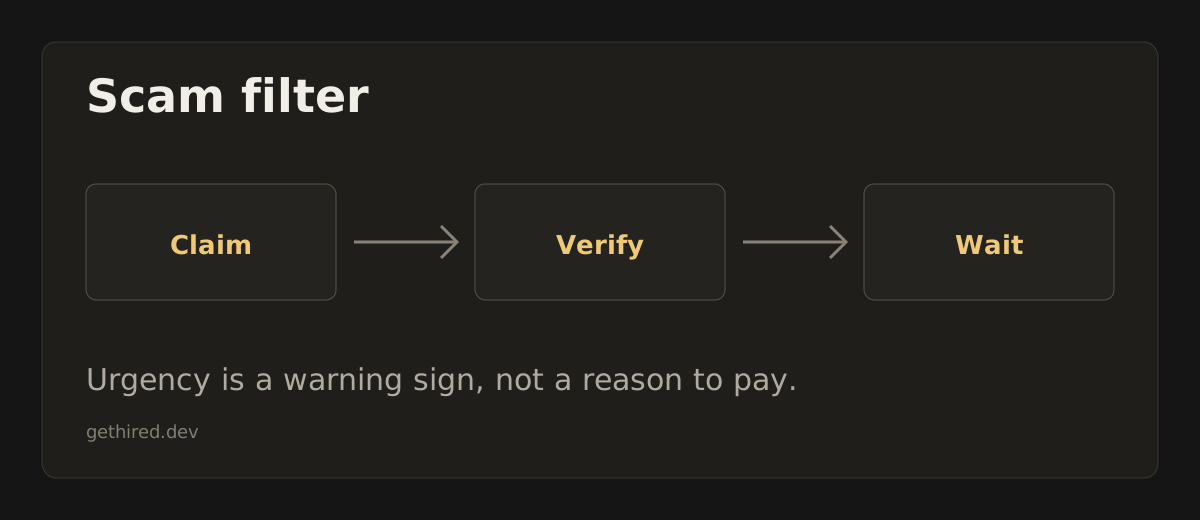
Suppose a message creates fear and asks you to act immediately. Treat that feeling as data. Real companies, schools, banks, and family members can usually wait while you verify through another channel. Scams often depend on the first emotional reaction.
What to do next
- Verify the company outside the message.
- Ask a trusted person before sending money.
- Never share wallet seed phrases.
- Report suspicious crypto fraud to local authorities or the FBI IC3 in the U.S.
Quick checklist
- Did I start this conversation?
- Is the person asking for money, codes, crypto, or secrecy?
- Can I verify through a known number or website?
- Would I still trust this after waiting 24 hours?
- Have I shown it to someone calm?
Mistakes to avoid
- Trusting screenshots of profits.
- Believing a video because the face looks real.
- Sending more money to recover earlier losses.
Final takeaway
The scammer wants speed. Your best defense is delay, verification, and refusing pressure.
the most common setup
AI crypto scams often begin outside crypto: a dating app, job offer, investment group, fake support chat, or social media message. The scammer builds trust first, then introduces crypto as the payment or investment method.
The dashboard may look professional. The returns may look steady. The support person may sound helpful. None of that proves the money is real.
stop before these actions
- Sending crypto to unlock a withdrawal.
- Paying a tax, fee, or verification charge to recover funds.
- Installing a wallet or trading app from a stranger’s link.
- Sharing seed phrases, screen recordings, or remote access.
- Trusting a celebrity, recruiter, or romantic partner who pushes urgency.
Crypto payments are hard to reverse. That is why scammers like them. Slow down before the transfer, not after.
Discussion
What would you try, change, or challenge after reading this guide? Specific results and errors help the next reader.
Comments will load as you reach this section.