
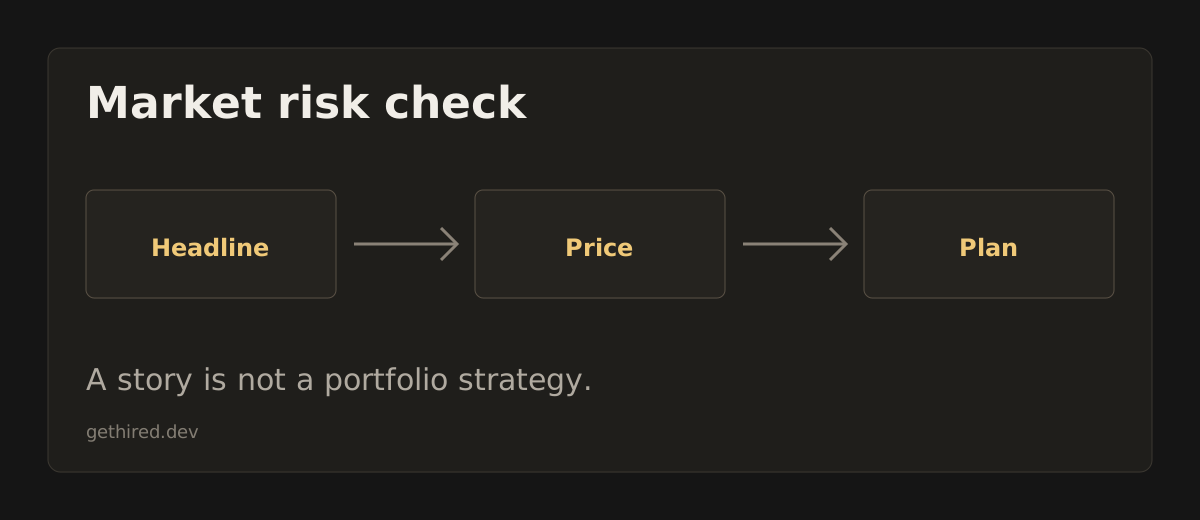
A beginner guide to separating real AI business growth from overexcited stock market narratives.
Quick answer
A real trend can still become overpriced. Learn the business, price, risk, and position size before buying.
Why this is trending
AI-related stocks and funds have pulled attention because data centers, chips, and automation are real spending themes.
Who this is for
This is for beginners who want to understand market stories without treating them as personal financial advice.
The simple way to understand it
| Question | Why it matters |
|---|---|
| What am I buying? | Name the actual asset, fund, or company |
| Why now? | Separate trend from timing |
| What can go wrong? | Risk is easier to see before buying |
| How much? | Position size protects the rest of your plan |
Simple example
Imagine this topic shows up in your feed, email, workplace, school, or investing app. A rushed reaction is to copy what the loudest person says. A better reaction is to write down the claim, check one reliable source, ask what decision it affects, and only then choose the next step. That turns a trend into usable judgment.
Practical steps
- Start with the official or primary source when money, identity, or career decisions are involved.
- Write the decision in one sentence before acting.
- Look for the risk that the headline does not mention.
- Use examples and numbers only when they match your situation.
- Recheck anything that changes often, such as rules, prices, rates, or platform policies.
Quick checklist
- What is the downside?
- What source confirms the claim?
- What happens if I wait?
- Does this fit my actual budget?
- Who benefits if I act quickly?
Mistakes to avoid
- Acting because the topic is trending.
- Trusting screenshots, summaries, or social posts without verification.
- Ignoring the boring details that decide whether the advice applies to you.
- Letting fear or excitement replace a written plan.
Final takeaway
A real trend can still become overpriced. Learn the business, price, risk, and position size before buying. This article is educational information, not personal financial advice.
Discussion
What would you try, change, or challenge after reading this guide? Specific results and errors help the next reader.
Comments will load as you reach this section.