
A simple safety guide for handling suspicious voice calls, family emergency scams, fake boss messages, and AI-cloned voices.
Quick answer
If a voice call asks for urgent money, secrecy, gift cards, crypto, or account access, hang up and verify through another channel. A familiar voice is no longer enough proof.
Why people are searching this
AI voice cloning has made impersonation scams more convincing, and the FBI has warned that AI-related scams are causing major losses.
Who this is for
This is for anyone who uses messages, calls, shopping sites, crypto apps, or social platforms and wants a slower, safer decision process.
The simple way to understand it
| Call says | Safer response |
|---|---|
| I need money now | Call the person back on a known number |
| Do not tell anyone | Tell a trusted person immediately |
| Pay in crypto or gift cards | Treat as scam |
| I am your boss, send codes | Verify through official work channel |
a simple example
Suppose a message creates fear and asks you to act immediately. Treat that feeling as data. Real companies, schools, banks, and family members can usually wait while you verify through another channel. Scams often depend on the first emotional reaction.
What to do next
- Create a family verification phrase.
- Pause before sending money.
- Use known phone numbers, not caller ID.
- Report the scam attempt if money or identity information was involved.
Quick checklist
- Did I start this conversation?
- Is the person asking for money, codes, crypto, or secrecy?
- Can I verify through a known number or website?
- Would I still trust this after waiting 24 hours?
- Have I shown it to someone calm?
Mistakes to avoid
- Trusting caller ID.
- Letting urgency override verification.
- Sending screenshots of codes or IDs.
Final takeaway
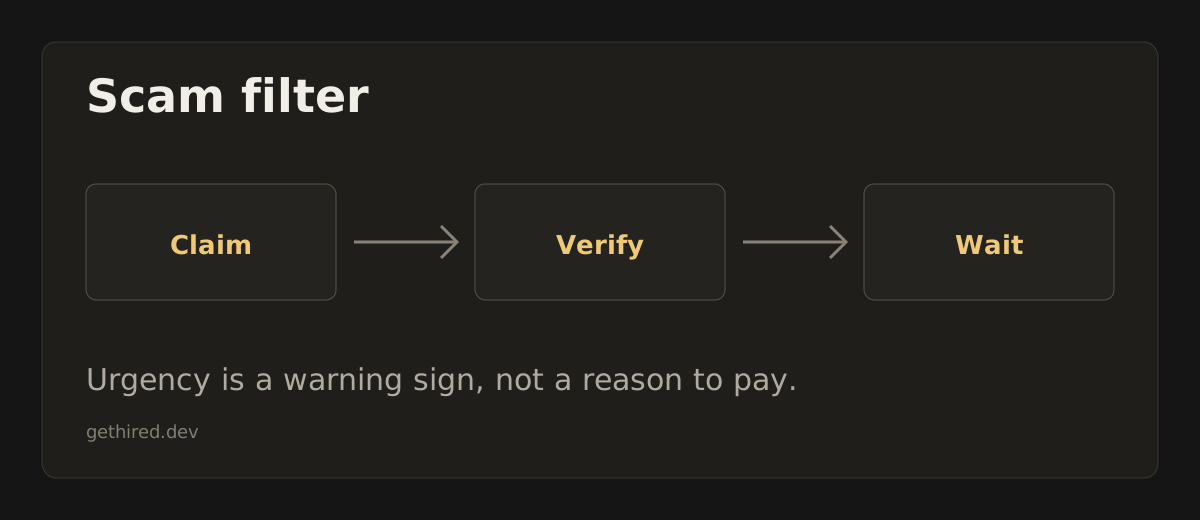
The rule is simple: emotional call, unusual payment, urgent secrecy equals verify somewhere else.
create a family verification phrase
Deepfake calls work because panic moves faster than verification. A simple family verification phrase can help. Pick a phrase that is easy for family members to remember but not posted online. If someone calls in an emergency asking for money, ask for the phrase or call the person back on a trusted number.
This is especially useful for parents, grandparents, and students living away from home.
what to do during a suspicious call
- Do not say the person’s name first. Ask who is calling.
- Hang up and call the real number you already have saved.
- Contact another family member.
- Refuse gift cards, crypto, wire transfers, or secrecy.
- Save the number and report the attempt if needed.
A real emergency can survive a two-minute verification step. A scam usually cannot.
Discussion
What would you try, change, or challenge after reading this guide? Specific results and errors help the next reader.
Comments will load as you reach this section.