
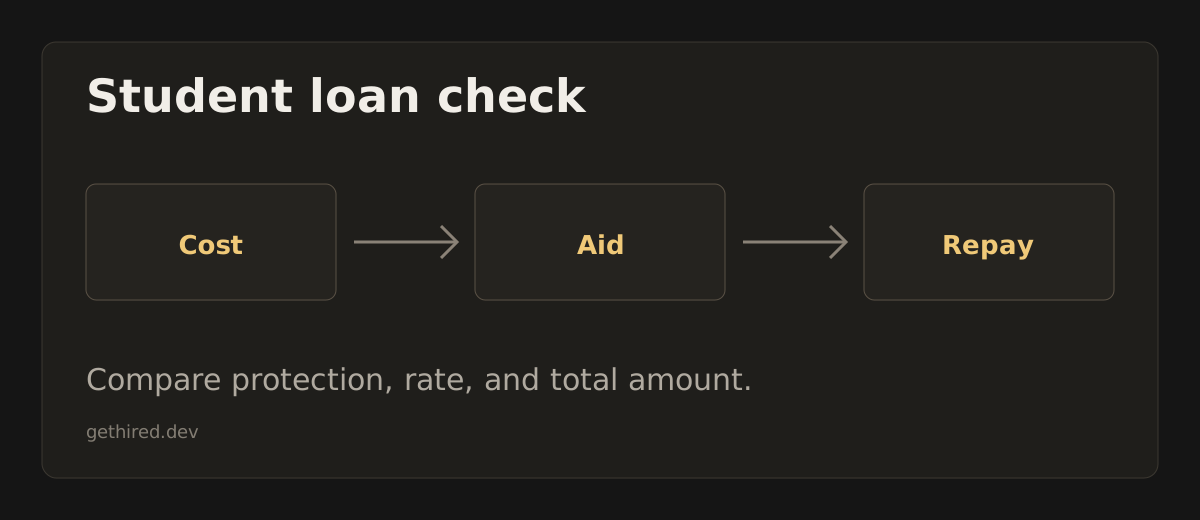
A plain-English guide to 2026 federal student loan changes, rate reductions, borrowing limits, and what students should compare before borrowing.
Quick answer
Student loan rules can change by loan type, borrower type, and date. Before borrowing, check the official federal aid page, your school aid office, interest rate, repayment protection, and total debt after graduation.
Why people are searching this
July 1 is a key date for many federal student loan changes, and the U.S. Department of Education announced an autopay interest-rate reduction beginning July 1, 2026.
Who this is for
This is for students and families comparing cost, debt, and career choices before signing up for something expensive.
The simple way to understand it
| Check | Why it matters |
|---|---|
| Loan type | Undergrad, parent, graduate, and private loans differ |
| Interest rate | Affects total repayment |
| Repayment plan | Federal protections may matter later |
| Borrowing cap | Can change how families cover costs |
a simple example
Suppose two options look similar: one has a lower monthly payment and one has better borrower protections. The better choice is not obvious until you compare total repayment, interest rate, forgiveness or deferment options, and what happens if income is lower than expected after graduation.
What to do next
- Start with grants, scholarships, and federal aid.
- Use private loans only after comparing protections.
- Estimate monthly payment before signing.
- Ask your school financial-aid office about current rules.
Quick checklist
- What is the downside?
- Who benefits if I act quickly?
- What source can confirm the claim?
- What happens if I wait one day?
- Does this fit my actual budget or plan?
Mistakes to avoid
- Borrowing the maximum without a plan.
- Comparing only monthly payment.
- Ignoring borrower protections on private loans.
Final takeaway
The cheapest-looking loan is not always the safest. Compare rate, protections, caps, and repayment options together.
This is educational information, not personal financial advice.
how to compare the real cost
Student loan changes matter because they affect monthly payments, borrowing limits, and future flexibility. The right question is not “can I borrow enough this semester?” It is “can I finish the program without creating a repayment problem I cannot handle?”
Build a one-page cost view before borrowing. Include tuition, fees, rent, food, transport, books, insurance, and emergency costs. Then compare that with grants, savings, work income, federal loans, and any remaining gap.
questions for financial aid offices
- What is the total cost of attendance?
- Which loan limits apply to my exact program?
- What options disappear after this year?
- Are there scholarships, assistantships, or payment plans?
- What happens if I attend part-time or take a break?
Get answers in writing when possible.
Discussion
What would you try, change, or challenge after reading this guide? Specific results and errors help the next reader.
Comments will load as you reach this section.