
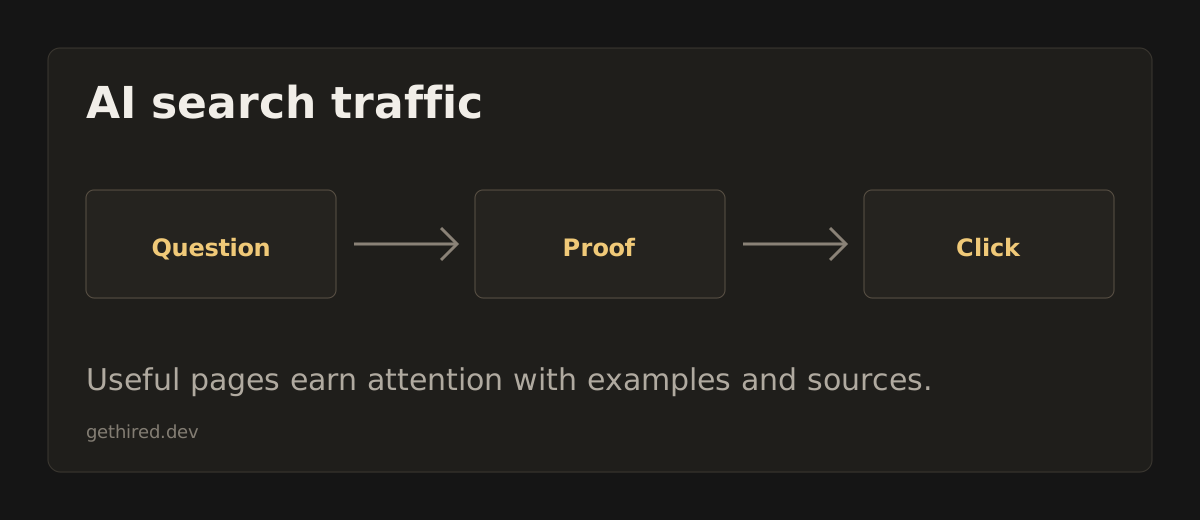
Why a site can rank well but receive fewer clicks because of AI Overviews, SERP features, snippets, and intent changes.
Quick answer
Rankings are only one signal. Track impressions, clicks, click-through rate, query intent, and whether the page earns a reason to visit.
The useful way to think about this is not “is this trend good or bad?” The better question is: what decision does it change for a real person? A student, job seeker, blogger, parent, or first-time buyer needs a next step, not just a headline.
Why people are searching this
AI answers and richer search results can reduce clicks even when rankings look good.
This topic has search potential because it sits close to a decision. People are not only curious. They may be choosing a major, applying for jobs, protecting money, changing repayment plans, deciding whether to buy a tool, or trying to understand why traffic changed. That kind of intent usually creates stronger long-tail searches than broad opinion posts.
The simple way to understand it
| Page element | Why it matters |
|---|---|
| Quick answer | Helps readers and search systems understand the page |
| Examples | Makes the content less generic |
| Sources | Supports claims that change over time |
| Internal links | Helps readers move to related decisions |
Real-world example
Imagine you see this topic while you are already under pressure: a deadline, a job application, a money decision, or a scary message. The risky move is to react to the emotion first. The better move is to slow the situation down, write the claim in one sentence, verify the source, and decide what actually changes for you.
For example, if a job offer looks exciting, the next step is not sending documents. The next step is checking the domain, finding the job on the company site, and confirming the recruiter through a separate channel. If a finance rule changes, the next step is not copying a comment from social media. The next step is finding the official page and comparing options.
What to do next
- Start with a specific reader question.
- Answer it near the top in plain language.
- Add examples, tables, and decision rules that AI summaries cannot fully replace.
- Update dates, screenshots, prices, and rules when they change.
- Link related posts so readers can continue logically.
Quick checklist
- Can I explain the decision in one sentence?
- Have I checked a source that is not trying to sell me something?
- What is the downside if I am wrong?
- What is the safest small next step?
- Would I make the same choice after waiting 24 hours?
Mistakes to avoid
- Writing generic summaries that already exist everywhere.
- Changing dates without improving the article.
- Adding sources without explaining what they mean.
- Ignoring mobile readability.
- Targeting broad keywords before winning specific questions.
frequently asked questions
Does AI content automatically hurt SEO?
Google says appropriate AI or automation is not against guidelines, but content made mainly to manipulate rankings is risky.
Do small sites still have a chance?
Yes, but they need useful examples, clear structure, and angles that are not commodity summaries.
Final takeaway
Rankings are only one signal. Track impressions, clicks, click-through rate, query intent, and whether the page earns a reason to visit. The goal is to turn a noisy trend into a clear, safer decision.
Discussion
What would you try, change, or challenge after reading this guide? Specific results and errors help the next reader.
Comments will load as you reach this section.