
A plain-English guide to repayment-plan notices, deadlines, forbearance, and questions borrowers should ask.
Quick answer
Read the notice, confirm it through official StudentAid.gov channels, and compare total payment impact before choosing.
Why this is trending
Borrowers affected by repayment changes are receiving notices and may need to choose a new plan.
Who this is for
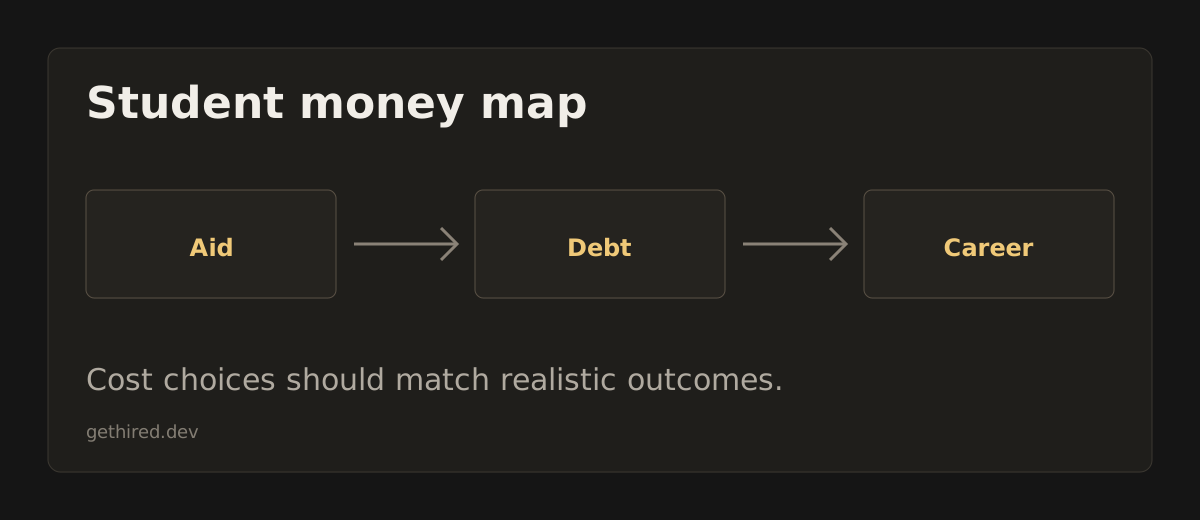
This is for students and families comparing education cost, debt, and career outcomes.
The simple way to understand it
| Question | Why it matters |
|---|---|
| Total cost? | Tuition is only one part |
| Loan type? | Federal and private protections differ |
| Expected income? | Debt should match realistic outcomes |
| Backup plan? | Life after graduation may not be linear |
Simple example
Imagine this topic shows up in your feed, email, workplace, school, or investing app. A rushed reaction is to copy what the loudest person says. A better reaction is to write down the claim, check one reliable source, ask what decision it affects, and only then choose the next step. That turns a trend into usable judgment.
Practical steps
- Start with the official or primary source when money, identity, or career decisions are involved.
- Write the decision in one sentence before acting.
- Look for the risk that the headline does not mention.
- Use examples and numbers only when they match your situation.
- Recheck anything that changes often, such as rules, prices, rates, or platform policies.
Quick checklist
- What is the downside?
- What source confirms the claim?
- What happens if I wait?
- Does this fit my actual budget?
- Who benefits if I act quickly?
Mistakes to avoid
- Acting because the topic is trending.
- Trusting screenshots, summaries, or social posts without verification.
- Ignoring the boring details that decide whether the advice applies to you.
- Letting fear or excitement replace a written plan.
Final takeaway
Read the notice, confirm it through official StudentAid.gov channels, and compare total payment impact before choosing. This article is educational information, not personal financial advice.
how to avoid missing the deadline
When a repayment notice arrives, turn it into a calendar task immediately. Add the deadline, a reminder two weeks before, and a reminder one month before if the window is longer.
Then keep a small record: notice date, servicer name, current plan, balance, estimated payment, and the action you took.
what borrowers should not assume
- That the old plan remains forever.
- That no payment means no interest.
- That every borrower has the same deadline.
- That social media screenshots apply to your loan.
- That the first payment estimate is always final.
Student loan transitions are administrative. Records help when systems, servicers, or messages get confusing.
Discussion
What would you try, change, or challenge after reading this guide? Specific results and errors help the next reader.
Comments will load as you reach this section.